
Asian cuisine is famous for its variety of flavours, fresh ingredients, and traditional cooking methods. From Chinese noodles and Japanese sushi to Vietnamese soups and Thai curries, every cuisine has its own identity. However, authentic Thai food stands out because of its unique combination of sweet, sour, salty, spicy, and bitter flavours.
Thai cooking focuses on balancing different tastes in one dish. It also uses fresh herbs, aromatic spices, coconut milk, chillies, and traditional sauces to create rich and memorable meals.
Although Thai food shares some ingredients and cooking methods with other Asian cuisines, its flavour combinations and food culture make it different. Understanding these differences can help food lovers appreciate what makes Thai cuisine so special.
1. A Unique Balance of Five Flavours
One of the biggest differences between Thai food and other Asian cuisines is its focus on balancing multiple flavours.
Thai dishes often combine five main tastes:
Sweet: Palm sugar and coconut milk add sweetness.
Sour: Lime juice and tamarind provide a tangy taste.
Salty: Fish sauce adds a rich savoury flavour.
Spicy: Fresh and dried chillies bring heat.
Bitter: Certain herbs and vegetables add depth.
For example, a traditional Thai salad may combine lime juice, chillies, palm sugar, and fish sauce. Each ingredient contributes something different to the overall taste.
Other Asian cuisines also use several flavour combinations, but Thai cooking is particularly recognised for bringing these tastes together in the same dish.
2. Fresh Herbs and Aromatic Ingredients
Fresh herbs play an important role in Thai cooking. They provide distinctive aromas and flavours that help separate Thai dishes from many other Asian food styles.
Some commonly used ingredients include:
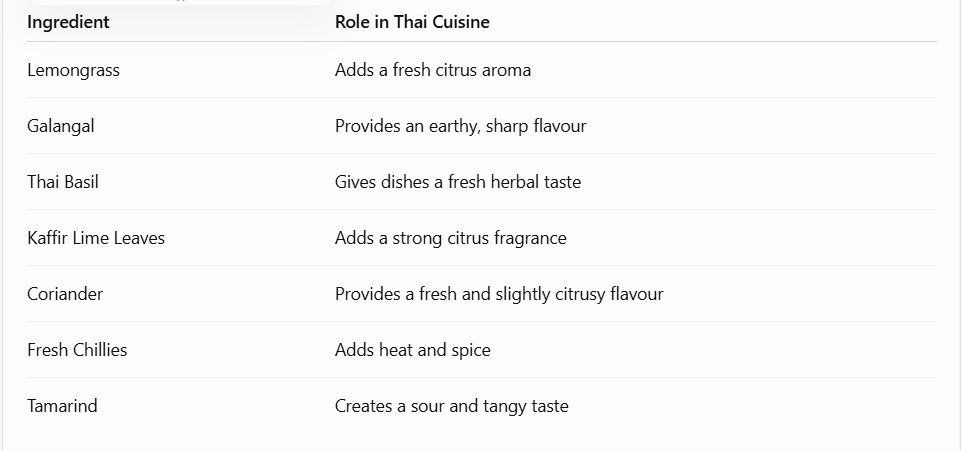
These ingredients are often used in soups, curries, salads, and stir-fried dishes.
While Chinese, Japanese, and Vietnamese cuisines also use fresh herbs, Thai cuisine has its own distinctive combinations of aromatic ingredients.
3. Thai Cooking Techniques and Preparation Methods
Cooking techniques also influence the taste and texture of Asian food. Thai cuisine uses several traditional methods to prepare different types of meals.
Some common techniques include:
Stir-Frying: Ingredients are cooked quickly over high heat, often in a wok.
Grilling: Meat, seafood, and vegetables are cooked over direct heat.
Steaming: This method is used to prepare fish and other delicate ingredients.
Boiling: Commonly used for traditional soups and broths.
Curry Preparation: Curry pastes are cooked with ingredients such as coconut milk, herbs, and spices.
These techniques help preserve the natural flavours of ingredients while creating different textures.
For example, Pad Thai uses stir-frying to combine noodles, vegetables, eggs, and sauce, while Tom Yum uses aromatic ingredients to create a flavourful soup.
4. Thai Food vs Other Asian Cuisines
Asian cuisine includes many different cooking traditions. Although these cuisines share certain ingredients, their flavours, preparation methods, and popular dishes can be quite different.
Here is a simple comparison:
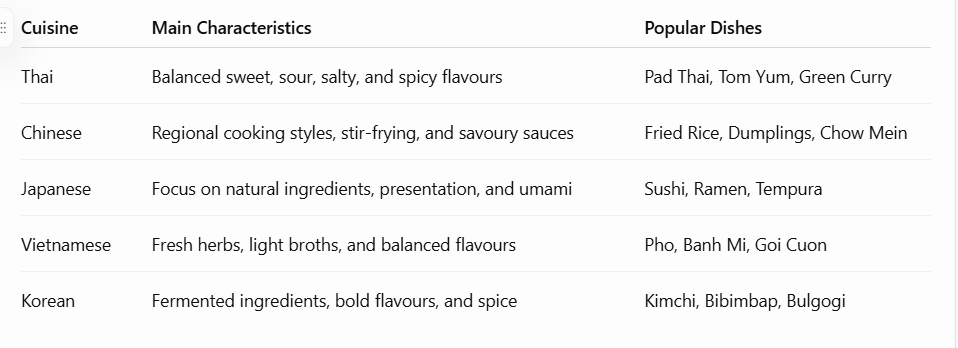
The main difference is not that one cuisine uses better ingredients than another. Each has its own food culture and traditional approach to cooking.
Thai cuisine is particularly recognised for its combination of aromatic herbs, chilli, citrus, and savoury sauces.
5. The Role of Coconut Milk in Thai Cuisine
Coconut milk is another important ingredient in many Thai dishes. It creates a creamy texture and adds a slightly sweet taste to different curries and soups.
Thai green curry, red curry, and Massaman curry are popular examples of dishes that commonly use coconut milk.
It also helps balance the heat from chillies and the stronger flavours of curry pastes.
Other Asian cuisines use coconut milk too, particularly in Southeast Asian cooking. However, its combination with Thai curry pastes, herbs, and spices gives Thai dishes a distinctive character.
6. Popular Thai Dishes That Show Its Unique Flavours
The best way to understand Thai cuisine is to explore some of its well-known dishes. Each one highlights different ingredients and flavour combinations.
Pad Thai
Pad Thai is a popular Thai noodle dish prepared with rice noodles, eggs, tofu or meat, bean sprouts, and a flavourful sauce. It offers a combination of sweet, sour, and savoury tastes.
Tom Yum Soup
Tom Yum is a traditional Thai soup known for its spicy and sour flavour. It commonly includes prawns, mushrooms, lemongrass, galangal, lime juice, and chillies.
Thai Green Curry
Green curry is prepared using green curry paste, coconut milk, vegetables, and meat or seafood. It is known for its creamy texture and aromatic flavour.
Som Tam
Som Tam is a traditional green papaya salad. It combines shredded papaya, tomatoes, lime juice, chillies, and other ingredients to create a refreshing mixture of flavours.
Massaman Curry
Massaman curry has a rich and creamy texture with a mild, slightly sweet taste. It commonly includes coconut milk, potatoes, peanuts, and aromatic spices.
7. Thai Food Culture and the Experience of Sharing Meals
Food is an important part of Thai culture. Meals are often enjoyed with family and friends, with several dishes placed on the table for everyone to share.
Instead of ordering only one main dish, people may enjoy rice, curries, soups, vegetables, and other side dishes together.
This style of dining allows everyone to experience different flavours and textures during the same meal.
Thai food culture also includes street markets, local food stalls, traditional recipes, and family cooking traditions. These experiences help preserve the country's culinary identity.
8. Why Is Thai Food Popular in Brisbane?
Brisbane has a diverse food scene, with restaurants offering different Asian cuisines and dining experiences. From Brisbane CBD and Fortitude Valley to South Brisbane, West End, and Newstead, locals and visitors can explore a wide range of Asian food options.
Thai cuisine attracts food lovers because it offers different choices for different preferences. Some people enjoy spicy curries, while others prefer noodles, rice dishes, soups, and refreshing salads.
Love Ping Pong, established in 2007, is part of Brisbane's established Asian dining scene. For people interested in exploring Asian flavours, it provides another dining option in the city.
Whether you are planning a casual lunch or dinner with friends, exploring Brisbane's Asian restaurants is a great way to discover different food cultures and flavours.